How Can an Expat Get a Mortgage in the Netherlands?
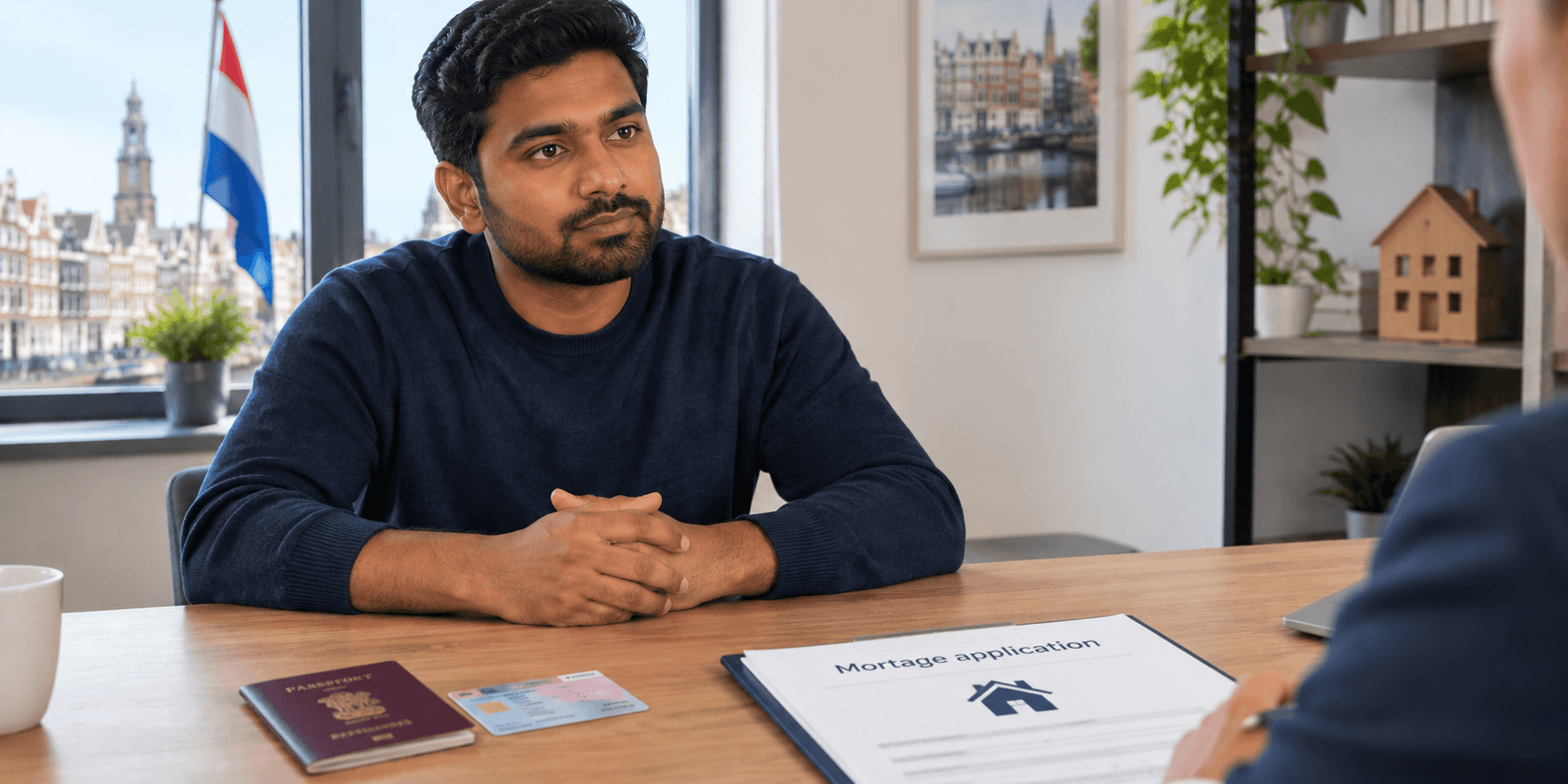
Good news: as an expat in the Netherlands, you can get a mortgage under largely the same conditions as Dutch citizens. Most lenders welcome international applicants, provided you meet certain requirements. Here is a comprehensive guide to the process.
Same requirements as Dutch residents
The fundamental requirements for an expat mortgage are the same as for any Dutch resident. You need a stable income, a property to purchase, and the ability to meet the lender's criteria. The maximum you can borrow is typically 100% of the property's market value (or 106% if you invest in energy-saving improvements).
Special conditions for expats
While the basics are the same, there are additional conditions that apply specifically to expats:
- BSN (Burgerservicenummer) — You need a Dutch citizen service number, which you receive when registering at your local municipality. This is essential for any financial transaction in the Netherlands.
- Residence permit — Non-EU nationals need a valid residence permit. The type of permit matters: a permanent permit or a highly skilled migrant (kennismigrant) permit is viewed most favorably by lenders.
- Residency duration — Some lenders require you to have lived in the Netherlands for at least 6 months, while others may require up to 2 or even 5 years. The requirements vary significantly between lenders.
- Partner requirements — If you are buying with a partner, most lenders require that your partner also lives in the Netherlands. If your partner lives abroad, options are more limited but still available with certain lenders.
- Country-specific rules — Some lenders have restrictions based on your country of origin or passport. An experienced advisor knows which lenders are most flexible for your specific nationality.
The application process
The mortgage application process for expats follows these general steps:
- Initial consultation — Meet with an independent mortgage advisor to discuss your situation, income, and budget.
- Pre-qualification — Your advisor calculates your maximum mortgage based on your income and debts.
- House hunting — Search for your ideal property within your budget.
- Formal application — Once your offer is accepted, your advisor submits the full mortgage application with all required documents.
- Approval and signing — The lender issues a mortgage offer, which you sign at the notary along with the property transfer.
Documents you will need
Prepare the following documents for your mortgage application:
- Valid passport or ID
- BSN number
- Residence permit (non-EU)
- Employment contract
- Recent pay slips (usually last 3 months)
- Employer's statement (werkgeversverklaring)
- Bank statements
- Proof of any existing debts or loans
Why expert assistance matters
Navigating the Dutch mortgage market as an expat has unique challenges. Not all lenders are equally welcoming to international applicants, and the conditions can vary significantly. An independent mortgage advisor with expat experience can identify the best lenders for your situation and handle the entire process in English.
Conclusion
Getting a mortgage as an expat in the Netherlands is absolutely possible and the process is more straightforward than many people expect. The key is to work with an advisor who understands the expat market and can match you with the right lender. Contact us for a free initial consultation.
Buying in The Hague? Read everything about an expat mortgage in The Hague, or book a free first meeting.