Can an Expat Get a Mortgage in the Netherlands?
The short answer is yes. Expats in the Netherlands can access mortgages under similar conditions as Dutch citizens, and in many cases, you can borrow up to 100% of the property's market value. The Netherlands is one of the more accessible countries in Europe when it comes to mortgage financing for internationals.
Similar conditions as Dutch citizens
Dutch mortgage regulations do not distinguish between Dutch nationals and expats when it comes to the basic rules. The same income assessment criteria, the same maximum Loan to Value ratios, and the same interest rates apply. What matters is your income, your financial obligations, and your ability to repay the mortgage.
Up to 100% of market value
Unlike many other European countries where you need a deposit of 10% to 20%, the Netherlands allows you to borrow up to 100% of the market value of the property. If you plan to make energy-efficient improvements, you can even borrow up to 106%. This makes homeownership accessible even if you have not built up significant savings.
What you need
To qualify for a mortgage as an expat, you will need the following:
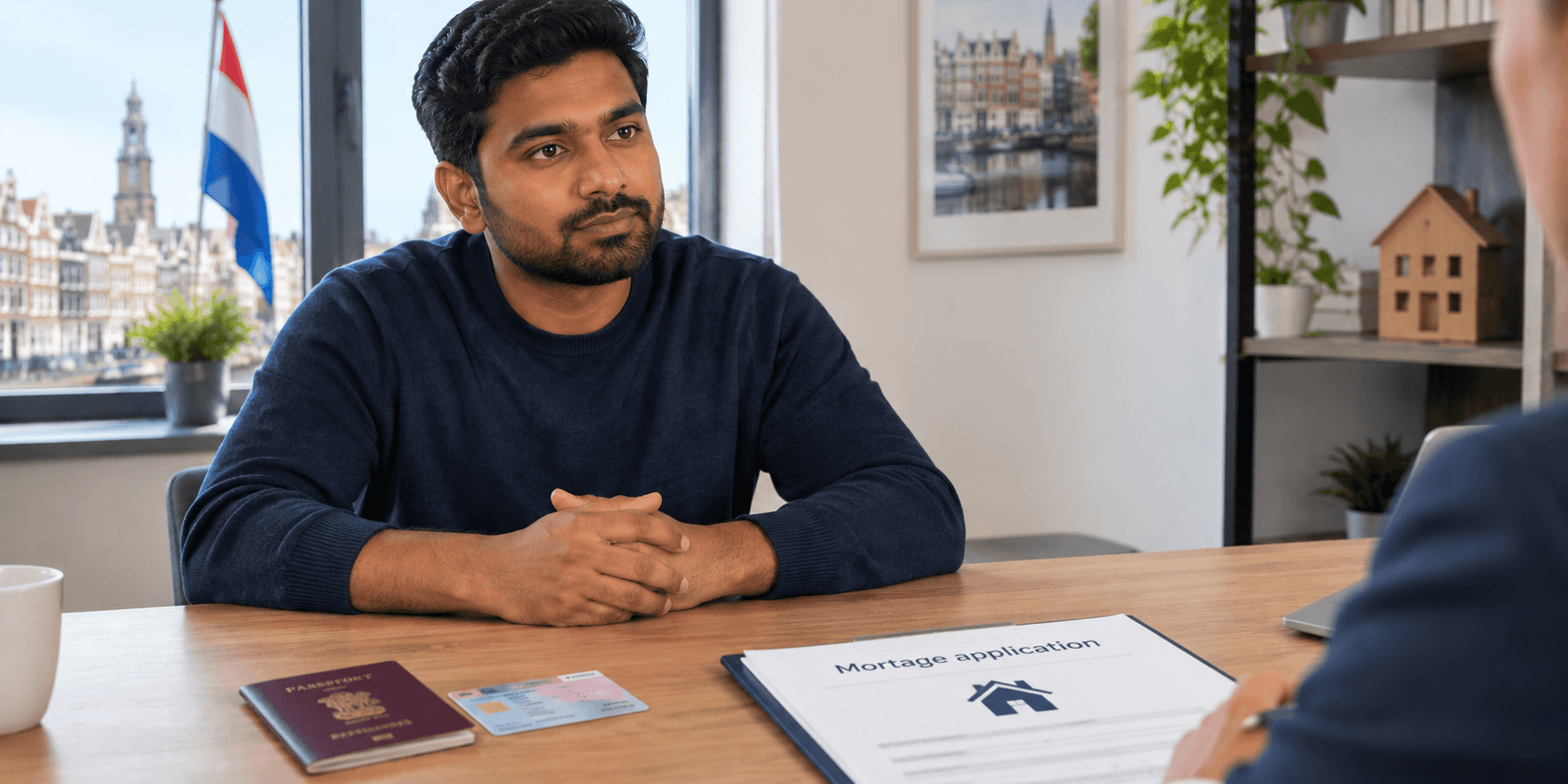
- BSN (Burgerservicenummer) — Your Dutch citizen service number, obtained when you register at your local municipality (gemeente). This is required for all financial transactions in the Netherlands.
- Residence permit — If you are a non-EU national, you need a valid residence permit. Highly skilled migrant permits (kennismigrantenregeling) are well-accepted by lenders.
- Residency duration — Requirements vary significantly between lenders. Some accept applicants who have just arrived, while others require 6 months, 2 years, or even 5 years of residency. An advisor can match you with lenders that fit your timeline.
- Partner living in the Netherlands — If you are buying with a partner, most lenders require that your partner also resides in the Netherlands. Some lenders make exceptions, but the options are more limited.
- Country-specific requirements — Depending on your nationality and passport, some lenders may have additional requirements or restrictions. This is one area where an experienced advisor can save you significant time and frustration.
Income and employment
Your income is the foundation of your mortgage calculation. Lenders look at:
- Employed: Your annual gross salary, including holiday pay and any regular bonuses
- Self-employed: Typically the average income from your last 3 years of tax returns
- International organization employees: Special calculation methods apply (see our article on mortgages for international organization employees)
The role of an advisor
While it is technically possible to arrange a mortgage without an advisor, for expats it is strongly recommended. The Dutch mortgage market has over 30 active lenders, each with different criteria for international applicants. An independent advisor who specializes in expat mortgages can quickly identify which lenders are the best match for your specific situation.
Conclusion
Expats can absolutely get a mortgage in the Netherlands. With the right documentation, a stable income, and an experienced advisor, the process is straightforward. Contact us for a free initial consultation to discuss your options.
Buying in The Hague? Read everything about an expat mortgage in The Hague, or book a free first meeting.